
IDF Launches ‘Hoshen’ Five-Year Plan Focusing on AI, Robotics, Space Warfare
 by Emmitt Barry, Worthy News Washington D.C. Bureau Chief
(Worthy News) – Israel’s military is moving ahead with an ambitious modernization effort as IDF Chief of Staff Eyal Zamir initiates concrete steps to implement a new five-year strategic plan aimed at reshaping the battlefield of the future.
According to the Israel Defense Forces, the multiyear program—known as Hoshen, a reference to the biblical priestly breastplate—will guide the military from 2026 through 2030. The plan is being led by Planning Directorate chief Hidai Zilberman, with roughly a dozen teams already working to define operational concepts, technologies, and force structure. Formal implementation is expected to begin April 1.
Among the most striking initiatives is the exploration of a defensive “beeper” strategy, inspired by the September 2024 operation in which thousands of Hezbollah operatives were wounded simultaneously through coordinated pager detonations. For the first time, the IDF is openly discussing adapting similar technology for defensive purposes, potentially to thwart ground invasions. Military officials have not clarified whether such systems would be deployed within Israel, along its borders, or embedded deeper within enemy infrastructure.
The Hoshen plan also places heavy emphasis on integrating autonomous systems and robotics across land, sea, and air forces. These systems are envisioned to operate both independently and alongside human soldiers, expanding operational reach while reducing risk to personnel. Artificial intelligence is expected to underpin nearly every aspect of the new doctrine, from battlefield management and intelligence analysis to logistics and command decision-making.
Space has also emerged as a new arena of concern. The IDF confirmed it will invest in a range of space-related capabilities as regional rivals expand their presence beyond Earth. Iranian satellite launches, some conducted with Russian assistance, have heightened concerns in Jerusalem and Washington that long-held technological advantages could erode.
To support the rapid expansion of AI-driven warfare, the military has already begun constructing larger and more powerful data centers, with further investments planned. Officials say the goal is to keep pace with what they describe as a global race toward AI-dominated battlefields.
The plan follows years of disruption that prevented earlier multiyear strategies from being fully realized. Former IDF chief Aviv Kohavi launched the Tenufah plan, but it was derailed by Hamas’s October 7 massacre and the ensuing war. His successor, Herzi Halevi, was likewise unable to roll out his own long-term framework due to sustained fighting.
A key financial pillar of Hoshen will be funding tied to a recently announced NIS 350 billion investment in Israeli defense capabilities over a decade. Prime Minister Benjamin Netanyahu said roughly half of that sum would be directed toward technological innovation and increasing Israel’s independence in weapons production.
Human readiness is another core focus. After more than two years of war, the IDF says it must rebuild resilience among reservists, conscripts, and career officers. Lessons drawn from internal probes into the October 7 attack, along with classified findings from later stages of the conflict, are shaping personnel reforms and training doctrine.
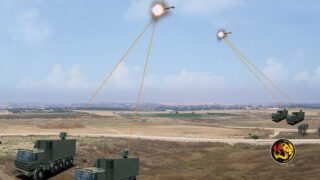
Within the Israel Air Force, the plan assigns new responsibilities, including closer coordination with ground forces to help prevent potential land invasions. Significant resources will also go toward strengthening Israel’s multilayered air defense network, with particular emphasis on countering evolving drone threats and expanding deployment of the Iron Beam laser interception system.
At the same time, air force planners are weighing future procurement challenges. Israel currently operates about 50 F-35 stealth fighters and an aging fleet of F-15 variants dating back to the 1970s. While the F-35 fleet can be expanded incrementally, the older F-15s may eventually require full replacement—a decision that hinges on available funding.
Those decisions are unfolding as Israel and the United States enter negotiations over the next memorandum of understanding on military aid. The current agreement, covering 2018 to 2028, commits Washington to $38 billion in assistance, but Israeli officials expect changes that could affect future procurement and planning.
Zamir’s push aligns with his broader warnings about the trajectory of modern warfare. Speaking recently at a defense technology summit in Tel Aviv, he said armies that fail to adopt artificial intelligence and autonomous systems risk falling behind, while those that move quickly will gain decisive advantages. He described AI not as a marginal upgrade, but as a transformative force that will define combat in the coming decade.
For Israel, the Hoshen plan represents an effort to absorb the hard lessons of recent wars while preparing for threats that are increasingly digital, autonomous, and multi-domain—stretching from underground tunnels to outer space.

Worthy News reports from a biblical worldview with a commitment to accuracy, transparency, and editorial independence. Learn more about About Worthy News, our Editorial Standards, AI Use Policy, Ownership of Worthy News, News Tips and Corrections, and Worthy News Staff.
💡 Did you know? One of the best ways you can support Worthy News is by simply leaving a comment and sharing this article.
📢 Social media algorithms push content further when there’s more engagement — so every 👍 like, 💬 comment, and 🔄 share helps more people discover the truth. 🙌
Latest Worthy News
If you are interested in articles produced by Worthy News, please check out our FREE sydication service available to churches or online Christian ministries. To find out more, visit Worthy Plugins.