
Gulf States Move Toward Joining Operation Against Iran Alongside U.S. and Israel as Middle East Rapidly Shifts
Key Facts
- Gulf states are moving closer to supporting U.S. and Israeli operations against Iran following repeated attacks on their energy infrastructure and cities
- Saudi Arabia and the UAE are shifting from neutrality to active cooperation, including opening bases and targeting Iranian financial networks
- A potential Arab-Israel alignment against Iran marks a historic shift that could redefine alliances and reshape the balance of power in the Middle East
 by Emmitt Barry, Worthy News Washington D.C. Bureau Chief
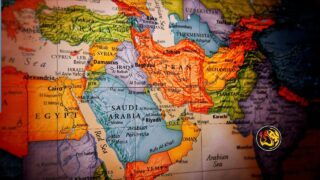
WASHINGTON D.C. (Worthy News) – Arab Gulf nations are moving closer to joining the expanding military campaign against Iran, signaling a dramatic shift in regional dynamics as sustained Iranian attacks strain their economies and threaten control of critical energy routes, the Wall Street Journal reported.
According to a Wall Street Journal report, U.S. allies in the Persian Gulf—particularly Saudi Arabia and the United Arab Emirates—are taking concrete steps to support operations led by the United States and Israel, even as they stop short of formally declaring military participation.
Saudi Arabia has quietly approved the use of King Fahd Air Base for U.S. operations, reversing earlier assurances that its territory would not be used in attacks against Iran. The shift comes after Iranian missile and drone strikes targeted key Saudi infrastructure, including energy facilities and areas near Riyadh.
Crown Prince Mohammed bin Salman is now said to be nearing a decision to enter the conflict more directly, as pressure mounts to restore deterrence. Saudi Foreign Minister Faisal bin Farhan warned that continued Iranian aggression would not go unanswered, stating that any assumption Gulf nations cannot respond is a “miscalculation.”
Meanwhile, the United Arab Emirates is increasing financial and internal pressure on Tehran. Authorities in Dubai have shut down Iranian-linked institutions, including the Iranian Hospital and Iranian Club, citing misuse tied to Iran’s Islamic Revolutionary Guard Corps. Officials have also signaled willingness to freeze billions in Iranian assets, a move that could significantly restrict Tehran’s access to global financial systems.
These developments open a new front—not only militarily, but economically—targeting Iran’s already strained financial networks.
Despite public statements denying direct involvement, evidence suggests Gulf cooperation may already be underway. Verified footage indicates missile launches from Bahrain, while Iranian strikes have hit U.S. assets stationed in Saudi Arabia, damaging refueling aircraft at Prince Sultan Air Base.
The escalation reflects a growing realization among Gulf leaders that neutrality is becoming untenable. Iran’s campaign has intensified in recent weeks, with more than 2,000 attacks reported against the UAE alone, including strikes on airports, refineries, hotels, and energy infrastructure across the region.
Tehran has also raised alarms by signaling ambitions to exert control over the Strait of Hormuz, a vital global oil chokepoint. Iranian officials have reportedly floated the idea of imposing tolls on shipping traffic—an unprecedented move that could reshape global energy markets and deepen geopolitical tensions.
Gulf states now face a difficult calculation. Direct involvement risks retaliation from Iran, yet inaction could embolden Tehran’s influence across the region. Leaders in Riyadh and Abu Dhabi are reportedly urging President Donald Trump to press forward decisively, aiming to dismantle Iran’s military capabilities before any cease-fire is considered.
The situation underscores a broader strategic bind. Gulf nations, long reliant on U.S. security guarantees, now find themselves pulled toward a conflict they sought to avoid, with limited ability to shape its trajectory.
As the conflict widens, what began as a U.S.-Israel confrontation with Iran is rapidly evolving into a broader regional struggle—one that could redefine alliances, energy security, and the balance of power in the Middle East.
If Saudi Arabia, the United Arab Emirates, and other Gulf states move from quiet cooperation to open participation, it would mark a historic geopolitical realignment—reshaping alliances, redrawing the region’s balance of power, and signaling the emergence of a new Middle East order centered on a shared objective: confronting Tehran. Such a shift would not only isolate Iran further but could accelerate the collapse of old rivalries, replacing them with a pragmatic, security-driven coalition that would have been nearly unimaginable in the recent past.

Worthy News reports from a biblical worldview with a commitment to accuracy, transparency, and editorial independence. Learn more about About Worthy News, our Editorial Standards, AI Use Policy, Ownership of Worthy News, News Tips and Corrections, and Worthy News Staff.
💡 Did you know? One of the best ways you can support Worthy News is by simply leaving a comment and sharing this article.
📢 Social media algorithms push content further when there’s more engagement — so every 👍 like, 💬 comment, and 🔄 share helps more people discover the truth. 🙌
Latest Worthy News
If you are interested in articles produced by Worthy News, please check out our FREE sydication service available to churches or online Christian ministries. To find out more, visit Worthy Plugins.