
Netanyahu Says Iran War ‘Not Over,’ Warns Nuclear Material Must Be Removed
Key Facts
- Netanyahu said the war with Iran is “not over,” warning that enriched uranium and nuclear sites still must be removed or dismantled.
- The Israeli leader said any agreement with Iran must include direct enforcement, saying, “You go in, and you take it out.”
- Netanyahu also said Israel should begin weaning itself from U.S. military aid as part of a long-term push for greater military self-reliance.
 by Emmitt Barry, Worthy News Washington D.C. Bureau Chief
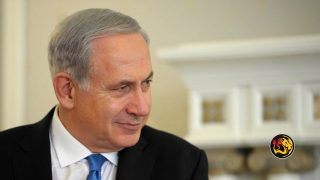
(Worthy News) – Israeli Prime Minister Benjamin Netanyahu said Sunday that the war against Iran is “not over,” declaring that Israel and its allies must ensure Tehran’s remaining enriched uranium and nuclear-enrichment infrastructure are removed or dismantled before the threat can be considered neutralized.
Speaking with CBS News chief Washington correspondent Major Garrett in an interview aired on 60 Minutes, Netanyahu said the military campaign had achieved “a great deal,” but he cautioned that Iran still retains dangerous capabilities.
“There’s still nuclear material, enriched uranium that has to be taken out of Iran. There are still enrichment sites that have to be dismantled,” Netanyahu said, according to CBS.
The Israeli leader said Iran’s remaining ballistic missile programs and support for regional terror proxies — including Hezbollah, Hamas, and the Houthis — continue to threaten Israel and the wider Middle East.
“We’ve degraded a lot of it. But all that is still there, and there’s work to be done,” Netanyahu said.
“You Go In, And You Take It Out”
Garrett pressed Netanyahu on how Israel, the United States, or international partners could remove Iran’s highly enriched uranium and dismantle its remaining nuclear infrastructure. Netanyahu declined to discuss military details but said the principle was clear.
“You go in, and you take it out,” Netanyahu said, according to the CBS transcript.
Netanyahu argued that any future agreement with Tehran would need direct oversight and enforcement to ensure Iran cannot preserve or hide nuclear material.
“If you have an agreement, and you go in, and you take it out, why not? That’s the best way,” he said.
The comments come as the United States and Iran are attempting to move toward a ceasefire framework after weeks of fighting, even as tensions remain high. President Donald Trump recently rejected Iran’s response to a U.S. peace proposal as “totally unacceptable,” while Tehran has warned it is prepared to retaliate if American strikes resume.
Iran’s Proxy Network Under Pressure
Netanyahu also linked Iran’s nuclear ambitions to its broader regional strategy, saying Tehran has built what he described as a “noose of death” around Israel through proxy forces.
He said the survival of Iran’s terror network depends heavily on the regime in Tehran.
“I think it’s the end of Hezbollah, it’s the end of Hamas, it’s probably the end of the Houthis, because the whole scaffolding of the terrorist proxy network that Iran built collapses if the regime in Iran collapses,” Netanyahu said.
The Israeli prime minister said Hezbollah continues to threaten Lebanon’s future, accusing Iran of wanting the terror group to remain armed and active inside the country.
Iran “wants Hezbollah to stay there and continue to torture Lebanon,” Netanyahu said.
Netanyahu Pushes Israeli Military Self-Reliance
In a significant shift, Netanyahu also said he wants Israel to begin reducing its dependence on U.S. military assistance, including the roughly $3.8 billion in annual aid Israel receives from Washington.
Netanyahu said “it’s time” for Israel to wean itself from remaining U.S. military support, a proposal that reportedly surprised even some of his own staff. The New York Post reported that Netanyahu described a decade-long transition to phase out that assistance while strengthening Israel’s military independence.
The remarks reflect a broader strategic posture Netanyahu has adopted since the October 7 attacks, arguing that Israel must retain the ability to act decisively against existential threats — with or without international consensus.
“Secured On My Watch”
Netanyahu declined to give a timetable for the Iran campaign or say how long Israeli forces may remain engaged. But he described the mission as essential to Israel’s survival.
“I’m not gonna give a timetable to it,” Netanyahu said. “But I’m gonna say that’s a terrifically important mission.”
Reflecting on the broader war, Netanyahu said Israel had moved from a posture of restraint to one of determined regional transformation.
“We’re going to change this condition where they’re ganging up on us thinking they’re going to wipe out the one and only Jewish state, wipe out 3,500 years of Jewish history,” Netanyahu said.
For Israel, the message was unmistakable: the battle is not merely about one round of strikes or one ceasefire document. It is about whether Iran will be allowed to preserve the nuclear material, missile systems, and terror infrastructure that have long threatened the Jewish state and destabilized the region.
Netanyahu made clear that, on his watch, Israel intends to see that threat confronted — not managed, delayed, or hidden behind another unenforced agreement.
Watch the extended version of Major Garrett's 60 Minutes interview with Israeli Prime Minister Benjamin Netanyahu. https://t.co/r6H1pkfsXe pic.twitter.com/7G2b1oDFoj
— 60 Minutes (@60Minutes) May 11, 2026

Worthy News reports from a biblical worldview with a commitment to accuracy, transparency, and editorial independence. Learn more about About Worthy News, our Editorial Standards, AI Use Policy, Ownership of Worthy News, News Tips and Corrections, and Worthy News Staff.
💡 Did you know? One of the best ways you can support Worthy News is by simply leaving a comment and sharing this article.
📢 Social media algorithms push content further when there’s more engagement — so every 👍 like, 💬 comment, and 🔄 share helps more people discover the truth. 🙌
Latest Worthy News
If you are interested in articles produced by Worthy News, please check out our FREE sydication service available to churches or online Christian ministries. To find out more, visit Worthy Plugins.