
Arab Gulf Powers Reportedly Strike Iran, Signaling Major Shift In Regional Alliances
 by Emmitt Barry, Worthy News Washington D.C. Bureau Chief
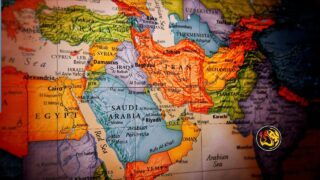
(Worthy News) – Saudi Arabia launched covert airstrikes inside Iran during the recent Middle East war, according to a Reuters exclusive citing two Western officials and two Iranian officials — a move that, if confirmed, would mark the first known Saudi military action carried out directly on Iranian soil. The reported strikes came in late March after the kingdom suffered Iranian attacks, including missile and drone strikes that exposed vulnerabilities in the U.S.-backed security umbrella protecting Gulf Arab states.
The revelations come just one day after The Wall Street Journal reported that the United Arab Emirates also carried out military strikes inside Iran, including an attack on a refinery on Iran’s Lavan Island in the Persian Gulf. Together, the reports point to a major strategic shift: Arab Gulf nations, long targeted by Iran and its proxy network, appear increasingly willing to join the United States and Israel in directly confronting Tehran’s regional aggression.
According to Reuters, the Saudi Air Force conducted “tit-for-tat” strikes in response to attacks on the kingdom. The specific targets were not confirmed, and Saudi officials did not directly acknowledge the operations. Iran’s Foreign Ministry also did not respond to requests for comment. Still, the report said the strikes showed Riyadh becoming far more assertive in defending itself against its main regional rival.
The broader conflict began after U.S. and Israeli strikes on Iran on February 28, after which Tehran reportedly attacked all six Gulf Cooperation Council states with missiles and drones. Iranian attacks targeted not only U.S. military bases, but also civilian infrastructure, airports, ports, oil facilities, and other strategic sites across the Gulf.
The UAE reportedly adopted a more hawkish posture, seeking to impose a direct military cost on Iran while maintaining limited public diplomacy. Saudi Arabia, by contrast, appears to have pursued a dual track: retaliating militarily while keeping diplomatic channels open with Tehran. Reuters reported that Saudi Arabia informed Iran after the strikes and that intensive contacts followed, eventually leading to an informal de-escalation understanding before Washington and Tehran agreed to a broader ceasefire on April 7.
The reported Saudi and Emirati strikes underscore a dramatic realignment in the Middle East. For decades, Iran sought to isolate Israel while intimidating Arab governments through proxies, missiles, and terror networks. But Tehran’s aggression may now be producing the opposite result: a growing alignment between Israel, the United States, and key Arab powers that see Iran not merely as Israel’s problem, but as a direct threat to regional order, energy security, and national survival.
Former Saudi intelligence chief Prince Turki al-Faisal captured Riyadh’s public posture in a recent Arab News op-ed, writing that when Iran and others tried to drag the kingdom into “the furnace of destruction,” Saudi leadership chose to protect the lives and property of its citizens. That careful language reflects the kingdom’s balancing act — resisting Iran without allowing the region to spiral into a wider war.
For Israel and the United States, the reported Gulf strikes may represent one of the most consequential developments of the war: Arab nations once reluctant to openly confront Tehran are now, according to multiple reports, beginning to hit back. It is a pivotal moment that could reshape the region’s military and diplomatic architecture for years to come.

Worthy News reports from a biblical worldview with a commitment to accuracy, transparency, and editorial independence. Learn more about About Worthy News, our Editorial Standards, AI Use Policy, Ownership of Worthy News, News Tips and Corrections, and Worthy News Staff.
💡 Did you know? One of the best ways you can support Worthy News is by simply leaving a comment and sharing this article.
📢 Social media algorithms push content further when there’s more engagement — so every 👍 like, 💬 comment, and 🔄 share helps more people discover the truth. 🙌
Latest Worthy News
If you are interested in articles produced by Worthy News, please check out our FREE sydication service available to churches or online Christian ministries. To find out more, visit Worthy Plugins.