
Netanyahu, Trump Discuss Iran War Options as Tensions Rise After UAE Nuclear Plant Drone Strike
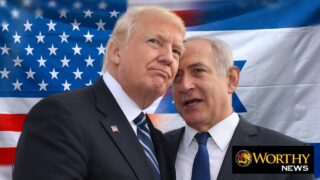 by Emmitt Barry, Worthy News Washington D.C. Bureau Chief
(Worthy News) – Israeli Prime Minister Benjamin Netanyahu spoke with President Donald Trump on Sunday evening as Israel and the United States weighed the possibility of renewed military action against Iran, following stalled nuclear negotiations and a drone strike near a nuclear power station in the United Arab Emirates.
Netanyahu’s office confirmed the call to The Times of Israel, while Hebrew media reported that the leaders discussed the Iran war, the possibility of renewed attacks, and Trump’s recent trip to China.
After the call, Netanyahu was expected to convene a security discussion with senior ministers and aides in Jerusalem, a forum often referred to as the “small security cabinet.” Such meetings typically include Foreign Minister Gideon Sa’ar, Defense Minister Israel Katz, Finance Minister Bezalel Smotrich, National Security Minister Itamar Ben Gvir, and Shas chairman Aryeh Deri.
The discussions come amid reports that Israel and the United States have been making intensive preparations for possible renewed strikes on Iran, potentially as soon as this week.
Trump Warns Iran: “Time Is of the Essence”
President Trump is also expected to hold a Situation Room meeting Tuesday with top national security advisers to review military options regarding Iran, according to Axios, citing U.S. officials.
Negotiations between Washington and Tehran have stalled since a ceasefire went into effect on April 8. Trump has said he still believes Iran wants a deal, but he warned Tehran that time is running out.
“For Iran, the Clock is Ticking, and they better get moving, FAST, or there won’t be anything left of them. TIME IS OF THE ESSENCE!” Trump wrote on social media.
Speaking separately to Israeli media and Axios, Trump said he was waiting for an updated Iranian proposal and warned that Tehran must move closer to U.S. demands over its nuclear program.
“We want to make a deal. They are not where we want them to be. They will have to get there or they will be hit badly, and they don’t want that,” Trump said.
Netanyahu, speaking before his call with Trump, said Israel remains fully alert to the Iranian threat.
“Our eyes are open regarding Iran,” Netanyahu said. “There are many possibilities, and we are prepared for every scenario.”
Iran Threatens Retaliation
Iranian officials responded sharply to Trump’s warnings.
Abolfazl Shekarchi, spokesman for Iran’s armed forces, warned that if the United States and Israel resumed attacks, Iran would respond with “unprecedented” and “surprising” scenarios.
Iran’s deputy parliament speaker, Hamidreza Hajibabaei, also warned against any attack on Iranian oil infrastructure, saying Iran would take measures that could prevent the United States and the world from accessing regional oil “for an extended period.”
Iranian state-linked media claimed Sunday that the United States had offered no meaningful concessions in the latest round of negotiations. Tehran has reportedly demanded an end to the war on all fronts, a halt to the U.S. naval blockade on Iranian ports, the lifting of sanctions, and the release of frozen Iranian assets.
U.S. demands reportedly include severe restrictions on Iran’s nuclear program, including allowing only one nuclear site to remain operational and transferring highly enriched uranium stockpiles out of Iranian hands.
Drone Strike Hits Near UAE Nuclear Plant
The diplomatic impasse deepened after a drone strike triggered a fire near the Barakah Nuclear Power Plant in Abu Dhabi on Sunday.
Authorities in the UAE said the fire broke out in an electrical generator outside the inner perimeter of the facility. No injuries were reported, and officials said radiation safety levels were not affected.
The Federal Authority for Nuclear Regulation said the plant’s essential systems remained ready and that all units were operating normally.
Rafael Grossi, head of the International Atomic Energy Agency, condemned the incident, saying military activity that threatens nuclear safety is unacceptable.
The UAE has recently accused Iran of being behind attacks on its energy and economic infrastructure. The Barakah plant, which began operations in 2020, supplies up to a quarter of the UAE’s electricity needs.
A Region on Edge
The renewed tension comes after Israel, the United States, and reportedly some Gulf states struck Iran during the recent war. Israel and the UAE were among the countries that sustained serious Iranian attacks, while the Strait of Hormuz remains a central flashpoint for the world economy.
For Israel, the question is not theoretical. Netanyahu’s government views Iran’s nuclear program, missile arsenal, and regional proxy network as an existential threat. For the Trump administration, the challenge is whether diplomacy can still restrain Tehran — or whether another round of military force is now unavoidable.
With Trump warning that Iran’s time is running out, Netanyahu convening his security ministers, and a drone strike near a Gulf nuclear plant raising fresh alarms, the Middle East appears to be entering another decisive moment.
The ancient conflict over power, sovereignty, and survival continues to place Israel at the center of global attention. For watchmen watching the region, the message is clear: the nations are being shaken, alliances are shifting, and the burden of Iran’s ambitions is no longer confined to Israel alone.

Worthy News reports from a biblical worldview with a commitment to accuracy, transparency, and editorial independence. Learn more about About Worthy News, our Editorial Standards, AI Use Policy, Ownership of Worthy News, News Tips and Corrections, and Worthy News Staff.
💡 Did you know? One of the best ways you can support Worthy News is by simply leaving a comment and sharing this article.
📢 Social media algorithms push content further when there’s more engagement — so every 👍 like, 💬 comment, and 🔄 share helps more people discover the truth. 🙌
Latest Worthy News
If you are interested in articles produced by Worthy News, please check out our FREE sydication service available to churches or online Christian ministries. To find out more, visit Worthy Plugins.