
Xi Jinping Pushes Renminbi as Global Reserve Currency in Communist Party Journal Amid Dollar Weakness
 by Emmitt Barry, Worthy News Washington D.C. Bureau Chief
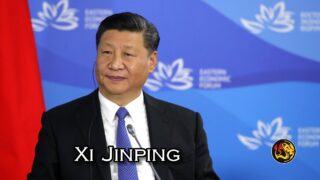
(Worthy News) – Chinese leader Xi Jinping has laid out his most explicit vision yet for transforming China’s currency into a global reserve, calling for the renminbi to become widely used in international trade, investment, and foreign-exchange markets—and ultimately held by central banks.
The message was delivered in an essay published Saturday in Qiushi, the official theoretical journal of the Chinese Communist Party. The publication is reserved for ideological direction and long-term strategy, signaling that Beijing’s currency ambitions are now framed as party doctrine rather than incremental financial reform.
The article was adapted from a 2024 address Xi gave to senior regional officials but was not released publicly until this week—an unusually direct intervention as global markets reassess the durability of U.S. dollar dominance.
Xi argued that a reserve currency requires institutional strength to match ambition. He called for a more capable People’s Bank of China, globally competitive financial institutions, and international financial centers such as Shanghai and Shenzhen that can attract overseas capital and influence global price-setting.
The timing coincides with renewed volatility in global markets and a weakening U.S. dollar. The greenback has fallen to a four-year low, a development welcomed by Donald Trump, who has argued that a softer dollar supports American exports. Federal Reserve leadership uncertainty, trade frictions, and rising geopolitical tensions have further pushed central banks to reconsider currency exposure.
Some economists see Beijing attempting to capitalize on these shifts. People’s Bank of China Governor Pan Gongsheng has previously spoken of a future “multi-polar” monetary system in which several major currencies share influence. “China senses the change of the global order more real than before,” said Kelvin Lam of Pantheon Macroeconomics.
Despite the rhetoric, the renminbi’s current role in official reserves remains limited. Data from the International Monetary Fund show the U.S. dollar still accounts for the majority of global reserves, with the euro second. The renminbi stood at under 2% of global reserves in the third quarter of 2025.
Analysts note that achieving true reserve-currency status would require reforms Beijing has historically resisted, including fuller capital-account openness and genuine convertibility. Trading partners have also urged China to allow a stronger exchange rate, arguing the currency remains undervalued and contributes to China’s massive trade surplus. Chinese officials deny manipulating the yuan for export advantage, saying their priority is stability.
Human Rights Shadow Over Currency Ambitions
Xi’s push for a “powerful currency” comes as China faces sustained international criticism over widespread human-rights abuses—issues that analysts say undermine Beijing’s bid for global financial trust.
China remains one of the world’s leading persecutors of Christians, according to multiple watchdog groups. Unregistered house churches are routinely raided, pastors are detained or sentenced to prison, crosses are torn down, and state-approved churches are pressured to align sermons with Communist Party ideology. Digital surveillance and social-credit enforcement have further tightened control over religious life.
At the same time, Beijing continues to face accusations of mass repression of Uyghurs in China’s Xinjiang region. Western governments and human-rights organizations have documented large-scale detention camps, forced labor, intrusive surveillance, family separations, and coercive population-control measures—actions the U.S. government has formally labeled genocide.
While Beijing rejects those accusations, critics argue that a currency seeking global reserve status must be backed not only by financial depth, but by legal transparency, political trust, and respect for human rights. For now, China’s ambitions for the renminbi continue to advance alongside a record that many nations say raises serious moral and systemic concerns.

Worthy News reports from a biblical worldview with a commitment to accuracy, transparency, and editorial independence. Learn more about About Worthy News, our Editorial Standards, AI Use Policy, Ownership of Worthy News, News Tips and Corrections, and Worthy News Staff.
💡 Did you know? One of the best ways you can support Worthy News is by simply leaving a comment and sharing this article.
📢 Social media algorithms push content further when there’s more engagement — so every 👍 like, 💬 comment, and 🔄 share helps more people discover the truth. 🙌
Latest Worthy News
If you are interested in articles produced by Worthy News, please check out our FREE sydication service available to churches or online Christian ministries. To find out more, visit Worthy Plugins.