
Iran Launches Strait of Hormuz Naval Drills as U.S. Expands Carrier “Armada” Amid Nuclear Talks
 by Emmitt Barry, Worthy News Washington D.C. Bureau Chief
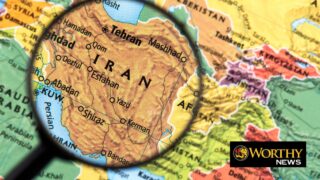
(Worthy News) – Iran launched live-fire naval exercises in the Strait of Hormuz on Monday, signaling heightened military readiness in one of the world’s most strategically vital waterways as nuclear negotiations with the United States resumed in Europe.
According to Iran’s state-run IRNA news agency, the drill—dubbed “Smart Control of the Strait of Hormuz”—was conducted by the naval forces of the Islamic Revolutionary Guard Corps (IRGC) under the supervision of IRGC Commander-in-Chief Maj. Gen. Mohammad Pakpour. Iranian state media said the exercise was designed to assess operational readiness, review security plans, and rehearse responses to potential security and military threats in the region.
The exercises unfolded within hours of renewed diplomatic efforts in Geneva aimed at reviving stalled negotiations over Iran’s nuclear program. Iranian Foreign Minister Abbas Araghchi wrote on X that he had arrived in Geneva “with real ideas to achieve a fair and equitable deal,” while warning that “submission before threats” was not on the table.
President Donald Trump has paired diplomatic outreach with a substantial military buildup across the Middle East, warning Tehran of severe consequences if an agreement is not reached swiftly.
“They want to make a deal, as they should want to make a deal,” Trump said recently. “They know the consequences if they don’t. If they don’t make a deal, the consequences are very steep.”
Major U.S. Naval Expansion
The U.S. military presence in the region has expanded significantly in recent weeks.
The aircraft carrier USS Abraham Lincoln is already operating in the Middle East, flanked by three warships equipped with Tomahawk cruise missiles and conducting around-the-clock flight operations under U.S. Central Command.
On Monday, U.S. Central Command (CENTCOM) posted images of EA-18G Growlers from Electronic Attack Squadron 133 and F-35C Lightning IIs from Marine Fighter Attack Squadron 314 preparing for launch from the Lincoln’s flight deck, underscoring the sustained tempo of operations in international waters.
In a significant escalation, the Pentagon confirmed it is deploying the Navy’s most advanced carrier, the USS Gerald R. Ford, to the Middle East. Two U.S. officials said the Ford carrier strike group will join the Lincoln and nine additional warships already operating under CENTCOM, dramatically increasing American naval firepower.
The Ford strike group will add more than 5,000 personnel and dozens of advanced fighter jets and surveillance aircraft, effectively doubling the aircraft and munitions available to U.S. commanders in the theater.
Trump confirmed he ordered the second carrier deployment “in case there isn’t a deal,” while reiterating that he prefers a negotiated outcome within weeks. He also described regime change in Tehran as potentially “the best thing that could happen” for Iran, though he emphasized that military action could still be avoided if Tehran agrees to acceptable terms.
“If they give us the right deal, we won’t do that,” Trump said. “And if they’re not, it’s going to be a bad day for Iran.”
Tensions in the Strait
The Strait of Hormuz, through which roughly one-fifth of the world’s oil supply passes, has long been a flashpoint between Iran and Western powers. Iran has repeatedly threatened to disrupt maritime traffic there in response to sanctions or military pressure.
U.S. forces have already encountered direct threats. Reports indicate that an Iranian drone approaching the Lincoln strike group was shot down last week.
Meanwhile, Tehran announced that a second round of talks would be held on Tuesday, mediated by Oman. Negotiations had restarted in Muscat on Feb. 6 after previous talks collapsed following a 12-day war last June, sparked by Israeli airstrikes on Iranian targets that dramatically escalated regional tensions.
U.S. Ambassador to Israel Mike Huckabee expressed skepticism Monday that Tehran would ultimately abandon its nuclear ambitions, citing “significant and legitimate doubt” that Iranian leaders would agree to fully lay down their pursuit of nuclear weapons capability.
Diplomacy Backed by Force
At one point last fall, the United States had no carrier presence in either U.S. Central Command or European Command—an unusual posture not seen in decades. The current deployment marks a decisive reversal, with two carrier strike groups soon positioned near Iran.
The Ford, currently sailing from the Caribbean, may take several weeks to arrive in theater. By then, its crew will have been deployed for roughly eight months—longer than the standard six- to seven-month carrier cycle—raising concerns among naval leadership about the strain on service members and their families.
Despite the overwhelming show of force, the administration continues to stress that diplomacy remains the preferred path.
With live-fire drills underway in the Strait of Hormuz and two American carrier strike groups converging on the region, the coming weeks are shaping up as a critical test of whether negotiation or confrontation will define the next chapter of U.S.-Iran relations.
Prophetic Undercurrent: Elam, Pressure, and the Growth of the Church
As Iran conducts live-fire drills in the Strait of Hormuz and faces mounting international pressure over its nuclear ambitions, another, quieter development continues inside the country—one that many believers view through a prophetic lens.
Despite surveillance, arrests, and digital crackdowns, Iran is widely recognized as home to one of the fastest-growing underground Christian movements in the world. House churches continue to multiply discreetly across cities and rural areas alike. Converts—many from Muslim backgrounds—often describe deep disillusionment with state ideology and a longing for spiritual truth that political power cannot satisfy.
Paradoxically, periods of heightened repression have frequently coincided with spiritual awakening. As authorities tighten media controls and restrict online access, testimonies persist of Scripture being shared privately, dreams and visions leading individuals to faith, and small prayer gatherings forming behind closed doors. What is suppressed publicly appears to be spreading personally.
For many Christians observing current tensions, the developments carry biblical resonance. The region historically known as Elam—located in what is now southwestern Iran—is directly addressed in Scripture. In Jeremiah 49, the prophet speaks of both judgment and restoration:
“But I will restore the fortunes of Elam in days to come,” declares the Lord (Jeremiah 49:39).
The passage foretells upheaval for Elam’s leadership and military strength, yet it concludes not with permanent destruction, but with future restoration. In light of Iran’s current military posture abroad and internal strain at home, some believers see a striking parallel: national pressure at the top and a spiritual movement at the grassroots.
While geopolitics dominate headlines—carrier strike groups, nuclear deadlines, and naval exercises—the spiritual landscape inside Iran tells a different story. History shows that walls, whether physical or digital, rarely silence conviction indefinitely. Political systems may harden under stress, but faith movements often deepen.
As tensions escalate in the Gulf and diplomacy hangs in the balance, many are watching not only what happens in the Strait of Hormuz—but what continues quietly within Iran itself.

Worthy News reports from a biblical worldview with a commitment to accuracy, transparency, and editorial independence. Learn more about About Worthy News, our Editorial Standards, AI Use Policy, Ownership of Worthy News, News Tips and Corrections, and Worthy News Staff.
💡 Did you know? One of the best ways you can support Worthy News is by simply leaving a comment and sharing this article.
📢 Social media algorithms push content further when there’s more engagement — so every 👍 like, 💬 comment, and 🔄 share helps more people discover the truth. 🙌
Latest Worthy News
If you are interested in articles produced by Worthy News, please check out our FREE sydication service available to churches or online Christian ministries. To find out more, visit Worthy Plugins.