
Thousands Ascend Temple Mount on Tisha B’Av as Jewish Prayer Fuels Renewed Prophetic Questions (In-Depth)
Key Facts
- Thousands of Jewish worshipers ascended the Temple Mount on Tisha B’Av, turning the solemn fast over the destruction of the biblical Temples into a striking display of renewed Jewish prayer at the contested holy site. The scenes underscored a profound shift now unfolding in Jerusalem, where mourning over the Temples’ destruction is increasingly joined by open calls for restored Jewish worship—and, among a growing number of activists, the rebuilding of the Temple itself.
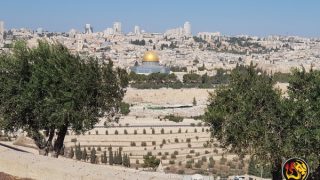
The annual fast mourning the destruction of Jerusalem’s Temples took on added significance as worshipers prayed openly at Judaism’s holiest site
 by Emmitt Barry, Worthy News Washington D.C. Bureau Chief
JERUSALEM (Worthy News) – Thousands of Jewish worshipers ascended the Temple Mount on Tisha B’Av, turning the solemn fast over the destruction of the biblical Temples into a striking display of renewed Jewish prayer at the contested holy site. The scenes underscored a profound shift now unfolding in Jerusalem, where mourning over the Temples’ destruction is increasingly joined by open calls for restored Jewish worship—and, among a growing number of activists, the rebuilding of the Temple itself.
The Islamic Waqf reported that 3,228 Israelis entered the compound during the morning alone, while Jewish advocacy groups said the total number of visitors surpassed 3,000 by midday. National Security Minister Itamar Ben Gvir was among those who entered the site carrying a prayer book and publicly participating in worship.
Some visitors brought Tisha B’Av prayer materials, while organized groups reportedly conducted prayers under police protection. Several Jewish visitors were arrested after praying in areas where authorities had not authorized such activity, even as prayer was increasingly tolerated in other sections of the compound.
Ben Gvir praised what he described as the ability of Jews to pray at the site. His appearance immediately drew condemnations from Jordan and the Palestinian Authority, which accused Israel of violating the religious status quo governing the Temple Mount.
The compound, known to Muslims as Haram al-Sharif, contains the Al-Aqsa Mosque and the Dome of the Rock. It is Judaism’s holiest site and Islam’s third-holiest site.
Under the traditional arrangement established after Israel captured Jerusalem’s Old City in 1967, the Jordanian-backed Waqf administers the Islamic holy sites while Israel controls security. Muslims have been permitted to pray there, while non-Muslims traditionally have been allowed to visit but not worship openly.
Prime Minister Benjamin Netanyahu has repeatedly maintained that Israel’s official policy remains unchanged. Yet Jewish prayer has become increasingly visible, and Israeli police have reportedly permitted limited prayer materials and worship practices that previously would have prompted immediate removal.
The development is politically explosive, but it also carries profound historical and prophetic significance for Jews and Bible-believing Christians around the world.
Tisha B’Av: A Day of National Mourning
Tisha B’Av, meaning the Ninth of Av, is the most solemn fast day on the Jewish calendar. In 2026, the observance began at sundown Wednesday, July 22, and concluded after nightfall Thursday, July 23.
The fast primarily commemorates the destruction of Jerusalem’s two Biblical Temples.
The First Temple, built by King Solomon, was destroyed by the Babylonian armies of King Nebuchadnezzar in the sixth century B.C., leading to the exile of the people of Judah.
The Second Temple, later expanded into a magnificent complex by Herod the Great, was destroyed by Roman forces in A.D. 70 following the Jewish revolt. Jewish tradition remembers both catastrophes as occurring on or around the Ninth of Av.
The day has also become associated with other tragedies endured by the Jewish people, including expulsions, massacres and persecution across the centuries.
Observant Jews traditionally fast, sit on low stools or the ground, refrain from ordinary pleasures and read the Book of Lamentations. The day is marked not merely by grief over a lost building, but by mourning the exile, destruction and spiritual separation symbolized by the Temple’s absence.
Yet the scenes unfolding on the Temple Mount reveal that, for a growing number of Israelis, Tisha B’Av is no longer solely about mourning what was destroyed. It is also about preparing for what they believe must one day be restored.
The Growing Call to Rebuild the Temple
There is presently no formal Israeli government program to construct a Third Temple, and any attempt to do so under current conditions could ignite a regional religious war.
Nevertheless, the idea has steadily moved from the margins of Israeli religious life toward broader public discussion.
Organizations such as the Temple Institute in Jerusalem have spent decades researching the Biblical Temple, recreating priestly garments, sacred vessels and other items intended for future Temple service. The organization openly states that its purpose is to prepare for the restoration of worship on Mount Moriah.
Jewish groups have also trained men of priestly descent, studied the laws governing sacrifices and investigated the qualifications of a red heifer described in Numbers 19. The ashes of such an animal would be required, according to biblical law and later Jewish tradition, for ritual purification connected with renewed Temple service.
Five red heifers were transported from the United States to Israel in 2022, generating intense interest among Temple activists and prophecy watchers. Their arrival did not mean that Temple construction was imminent, and any potential candidate would still have to satisfy exacting rabbinical requirements. Nevertheless, the project demonstrated how seriously some groups are preparing for the possibility of restored Temple worship.
The most significant change may not be architectural but spiritual and political.
Jewish prayer on the Temple Mount, once conducted secretly or prohibited altogether, is becoming increasingly public. Each large ascent establishes another precedent. Each prayer service weakens the assumption that Jews may visit their holiest site but must remain silent there.
For generations, Jewish worshipers prayed at the Western Wall because it was the closest accessible location to the place where the Temple once stood. The sight of thousands now ascending the Mount itself on the day commemorating the Temple’s destruction represents a remarkable shift.
Yeshua’s (Jesus’) Warning in Matthew 24
For followers of Yeshua (Jesus), the developments raise unavoidable prophetic questions.
Standing near the Second Temple, Yeshua warned His disciples that the magnificent complex would be destroyed.
“Do you not see all these things? Assuredly, I say to you, not one stone shall be left here upon another, that shall not be thrown down” (Matthew 24:2).
That warning was fulfilled when Roman armies destroyed Jerusalem and the Temple in A.D. 70.
But Yeshua’s prophecy did not end with that destruction. He also warned of a future event connected to the “abomination of desolation” spoken of by the prophet Daniel.
“Therefore when you see the ‘abomination of desolation,’ spoken of by Daniel the prophet, standing in the holy place … then let those who are in Judea flee to the mountains” (Matthew 24:15–16).
The immediate historical pattern behind His warning was the desecration of the Temple by the Seleucid ruler Antiochus IV Epiphanes in the second century B.C. Antiochus outlawed Jewish worship, erected a pagan altar, and sacrificed swine at the Temple.
Yet Yeshua spoke of the abomination as something His disciples should still expect to see.
This has led many conservative evangelical interpreters to conclude that the prophecy points beyond Antiochus—and beyond even the Roman destruction—to a final end-times desecration involving a functioning Jewish sanctuary or holy place.
The Temple in 2 Thessalonians 2
The Apostle Paul gave a similar warning in his second letter to the Thessalonians.
Paul wrote that the “man of sin,” also called the “son of perdition,” would oppose God and exalt himself above every object of worship:
“So that he sits as God in the temple of God, showing himself that he is God” (2 Thessalonians 2:4).
When Paul wrote those words, the Second Temple was still standing in Jerusalem. Yet the passage connects this act of self-exaltation with events preceding the return of the Messiah and the destruction of the lawless one.
For this reason, many prophecy teachers believe Paul’s language anticipates a future Temple, sanctuary, or recognized holy place in Jerusalem in which the final adversary will commit an act of blasphemous desecration.
In light of current events, the convergence between Daniel, Matthew 24 and 2 Thessalonians 2 cannot be lightly dismissed. Each passage describes a climactic rebellion against God involving desecration, false worship and an arrogant ruler demanding the honor that belongs to God alone.
The modern preparations for Temple worship do not prove that the final prophetic scenario is at hand. Nor does every Jewish prayer on the Temple Mount constitute fulfillment of Biblical prophecy.
But the physical, religious, and political conditions envisioned by earlier generations are no longer impossible to imagine.
Jerusalem is once again under Jewish sovereignty. The Hebrew language has been restored. Priestly lineage is being studied. Temple vessels have been prepared. Jewish worship is returning to the Mount. Political leaders are openly discussing prayer rights at the site.
The prophetic stage is not complete—but pieces once scattered across centuries are increasingly visible in one place.
The Warning: Do Not Be Deceived
Yeshua’s central warning in Matthew 24 was not speculation. It was vigilance.
“Take heed that no one deceives you” (Matthew 24:4).
He warned that false messiahs, wars, persecution, lawlessness, and spiritual deception would intensify before His return. The abomination of desolation would not be merely a geopolitical crisis. It would be a direct assault upon the worship and authority of God.
Paul gave the same warning. The coming lawless one would operate “according to the working of Satan, with all power, signs, and lying wonders” (2 Thessalonians 2:9).
The danger will not only be military force. It will be deception so persuasive that those without a love for the truth will willingly embrace a lie.
Believers should therefore resist both careless date-setting and spiritual indifference.
The Temple Mount must not become an object of sensationalism. Nor should Christians presume that political activism can manufacture God’s prophetic timetable. Scripture calls the people of God to watch, pray, remain grounded in truth and recognize that prophecy ultimately points to Yeshua—not to buildings, political movements or human power.
The rebuilt Temple would be one of the most consequential developments in modern history. Yet Scripture warns that its appearance may precede not immediate peace, but unprecedented deception and conflict.
The events of Tisha B’Av 2026 are therefore worth watching—not because prophecy has necessarily been fulfilled, but because Jerusalem is increasingly becoming the stage upon which the Biblical conflict over worship, sovereignty and the coming King may unfold.
The ruins mourned for nearly two thousand years are no longer distant memories. They have become the focus of an active movement, a growing national debate and a profound prophetic warning.
Jerusalem remains the city over which Yeshua wept.
And it remains the city to which He promised to return.

Worthy News reports from a biblical worldview with a commitment to accuracy, transparency, and editorial independence. Learn more about About Worthy News, our Editorial Standards, AI Use Policy, Ownership of Worthy News, News Tips and Corrections, and Worthy News Staff.
💡 Did you know? One of the best ways you can support Worthy News is by simply leaving a comment and sharing this article.
📢 Social media algorithms push content further when there’s more engagement — so every 👍 like, 💬 comment, and 🔄 share helps more people discover the truth. 🙌
Latest Worthy News
If you are interested in articles produced by Worthy News, please check out our FREE sydication service available to churches or online Christian ministries. To find out more, visit Worthy Plugins.