
Street Preacher’s Arrest Sends Major First Amendment Test to U.S. Supreme Court
 by Emmitt Barry, with reporting from Washington D.C. Bureau Staff
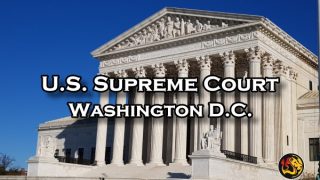
WASHINGTON, D.C. (Worthy News) – A case involving a Mississippi street preacher–arrested for sharing the Gospel outside a concert venue–has now reached the U.S. Supreme Court, setting the stage for a ruling that could reshape how Americans defend their constitutional rights against local restrictions.
Gabriel Olivier, an evangelical street preacher from Bolton, Mississippi, says the City of Brandon violated his religious liberty and freedom of speech when officers barred him from sharing Christ outside the Brandon Amphitheater. The city forced him into a “designated protest zone,” and when he refused to stay there, he was cited, fined, and handed a suspended jail sentence.
“I love to tell people about Jesus,” Olivier said. “I come to the venue to hand out gospel tracts and tell people about Christ.”
But instead of protecting his speech, the city used a broad ordinance to push him away from crowds–an action Olivier and his attorneys say amounts to viewpoint discrimination.
Legal Battle Centers on Whether Christians Can Even Challenge Restrictive Laws
The Supreme Court is not deciding yet whether Brandon’s ordinance violates the First Amendment. Instead, the justices will determine whether Olivier even has the legal right to challenge the ordinance after receiving a conviction but no jail time.
Lower courts dismissed his civil rights lawsuit, claiming he could not challenge the constitutionality of the ordinance because he had already been convicted under it–even though he never served jail time and could not file a habeas appeal.
Nate Kellum of First Liberty Institute, representing Olivier, said the ruling creates an impossible trap for Christians and others seeking to defend their freedoms.
“This guarantee of religious liberty is meaningless if we don’t have the opportunity to protect those rights in court,” Kellum said. “Under the Fifth Circuit’s view, people like Mr. Olivier must either break the law again or surrender their constitutional rights.”
A Growing Trend: Restrictive “Protest Zones” Used to Sideline Christian Witness
Brandon city officials say Olivier shouted at passersby and displayed graphic pro-life signs, prompting complaints and police involvement. They argue that the protest zone keeps order before and after concerts.
But Christian ministries and free speech advocates warn that designated protest zones are increasingly used nationwide to push Christian expression out of sight.
“If they can limit your free speech in a public park, they can take away a fundamental right,” said Jesse Morrell of Open Air Outreach.
Across the country, evangelists, pro-life volunteers, and Christian students have faced similar restrictions–often justified by vague “public safety” concerns.
What the Supreme Court Must Decide
At the heart of the case lies a foundational question: Do Americans—especially Christians seeking to share their faith—have the right to challenge an unconstitutional law before being forced to violate it again? Under the Fifth Circuit’s interpretation, Olivier and others in his position face an impossible dilemma: either surrender their First Amendment freedoms and comply with a restrictive ordinance, or knowingly break that ordinance again and expose themselves to fresh criminal penalties just to gain access to the courts. Constitutional scholars warn that the Supreme Court’s ruling could determine whether citizens can still preemptively defend their religious liberty and free speech, or whether they must endure repeated prosecutions before being allowed to contest government overreach. The justices are expected to issue a decision later this term—a ruling that may shape the future of public evangelism in America.
Christian Perspective: A Pivotal Moment for Religious Liberty
This case arrives at a time when many believers see an increasing hostility toward public expressions of faith. Street preachers, pro-life advocates, and Christian students have all faced growing government pressure to stay silent–or stay out of sight.
If the Court rules in Olivier’s favor, it may reaffirm that religious liberty does not depend on government permission and that Christians do not lose their rights because others find their message uncomfortable.
If the Court rules against him, local governments may gain expanded authority to confine or restrict public evangelism–setting a precedent that could ripple nationwide.

Worthy News reports from a biblical worldview with a commitment to accuracy, transparency, and editorial independence. Learn more about About Worthy News, our Editorial Standards, AI Use Policy, Ownership of Worthy News, News Tips and Corrections, and Worthy News Staff.
💡 Did you know? One of the best ways you can support Worthy News is by simply leaving a comment and sharing this article.
📢 Social media algorithms push content further when there’s more engagement — so every 👍 like, 💬 comment, and 🔄 share helps more people discover the truth. 🙌
Latest Worthy News
If you are interested in articles produced by Worthy News, please check out our FREE sydication service available to churches or online Christian ministries. To find out more, visit Worthy Plugins.