
Abbas Receives Draft Interim Constitution as PA Advances Statehood Effort
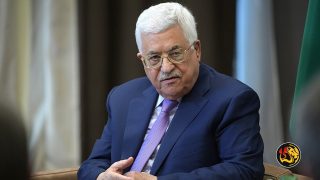 by Emmitt Barry, Worthy News Washington D.C. Bureau Chief
(Worthy News) – Palestinian Authority President Mahmoud Abbas has received a 70-page draft “Interim Constitution” aimed at laying the legal groundwork for a future Palestinian state, Palestinian media reported. The document was presented in Ramallah by a constitutional committee led by Mohammed al-Hajj Qassem, according to the PA-affiliated WAFA.
Finalized after months of consultations, the draft will be submitted to the Executive Committee of the Palestine Liberation Organization before public release. Palestinian officials say the constitution is intended to modernize the PA’s legal framework, which has operated under basic laws since the Oslo Accords, and to prepare for a possible declaration of statehood.
Abbas stated, “This year is the year of democracy. We have set a date for the Palestinian National Council elections, both within Palestine and abroad, as well as for the eighth Fatah conference, in addition to holding local elections next April.”
Israeli officials are expected to oppose any unilateral move, arguing that it violates the Oslo Accords, which require direct negotiations.
Analysts say the constitution’s impact on daily life would likely be limited, as Israel retains overall security control of the territory. However, embedding statehood claims in a constitutional framework could strengthen the PA’s standing internationally, particularly as it seeks broader recognition and responds to U.S. and international demands for political and institutional reform.
Prophetic Concerns Raised Over Push for Two-State Framework
The renewed momentum behind a two-state solution has also stirred strong reactions among biblical prophecy teachers and evangelical leaders who interpret territorial partition through passages such as Joel 3:2, which warns of judgment upon nations that “divided up My land.”
Several well-known prophecy scholars cautioned that any attempt to divide territory understood as covenant land—biblically promised to the descendants of Abraham, Isaac, and Jacob—carries serious spiritual implications.
George Whitten, founder of Worthy Ministries, noted the complexity of the issue. “While the land is covenanted with the descendants of Abraham, Isaac, and Jacob, it does not mean that God doesn’t have a part to play with the Sons of Ishmael,” he said.
Whitten pointed to Genesis 17:20, where God promises to bless Ishmael with multiplication and influence. “God’s promise to Ishmael was remarkably specific and generous,” he said, referring to the twelve princes listed in Genesis 25:12–16 — Nebaioth, Kedar, Adbeel, Mibsam, Mishma, Dumah, Massa, Hadad, Tema, Jetur, Naphish, and Kedemah — regarded as the patriarchs of the Arab peoples. “This was a divine blessing of multiplication, prosperity, and influence that God Himself initiated out of His compassion for Hagar and her son.”
At the same time, Whitten argued that this blessing exists in tension with theological elements within Islam that he believes conflict with the Abrahamic blessing principle of Genesis 12:3: “I will bless those who bless you, and whoever curses you I will curse.”
“The challenge we face is that traditional Islamic teaching includes antagonism toward both Christians and Jews, which places adherents in direct conflict with God’s blessing principle,” he said. “When a religious system teaches its followers to curse those whom God has called to bless, it creates a spiritual barrier to receiving the fullness of what God intended for Ishmael’s descendants.”
Still, Whitten stressed that this tension does not absolve believers of their responsibility to pursue peace. “As ministers of reconciliation, called according to 2 Corinthians 5:18–19, we see the urgent need to bring genuine, lasting peace to the Middle East,” he said. “But we must be clear-eyed about the reality: this can only be accomplished through the Prince of Peace, Yeshua HaMashiach (Jesus Christ) — not through political resolutions, international agreements, or land divisions imposed by secular authorities.”
Whitten concluded that while diplomacy has its place, true and enduring peace in the region must come through spiritual transformation — one that honors God’s covenant purposes while extending grace and the gospel message to all peoples, including the descendants of Ishmael.

Worthy News reports from a biblical worldview with a commitment to accuracy, transparency, and editorial independence. Learn more about About Worthy News, our Editorial Standards, AI Use Policy, Ownership of Worthy News, News Tips and Corrections, and Worthy News Staff.
💡 Did you know? One of the best ways you can support Worthy News is by simply leaving a comment and sharing this article.
📢 Social media algorithms push content further when there’s more engagement — so every 👍 like, 💬 comment, and 🔄 share helps more people discover the truth. 🙌
Latest Worthy News
If you are interested in articles produced by Worthy News, please check out our FREE sydication service available to churches or online Christian ministries. To find out more, visit Worthy Plugins.