
Thune Moves Toward Standalone FISA Renewal Despite Trump Demand for Election Integrity Measures
 by Emmitt Barry, Worthy News Washington D.C. Bureau Chief
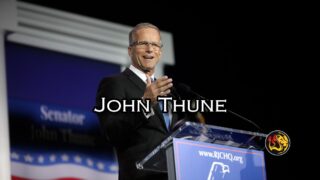
(Worthy News) – Senate Majority Leader John Thune is moving toward a standalone renewal of Section 702 of the Foreign Intelligence Surveillance Act, setting up a sharp Republican divide with President Donald Trump, who has demanded that any FISA extension be paired with his election integrity legislation.
Section 702, a powerful surveillance authority used by U.S. intelligence agencies to monitor foreign targets overseas, lapsed over the weekend after Congress failed to pass another extension. Supporters say the program is essential for tracking terrorists, cyber actors, drug traffickers, and hostile foreign governments. But for many conservatives and civil liberties advocates, the program’s history of warrantless searches involving Americans’ communications has made it a symbol of Washington’s post-9/11 surveillance state.
Thune, R-S.D., has signaled that Senate Republicans are counting votes and preparing to move quickly on a clean reauthorization, arguing that the intelligence tool should be restored without delay. He has described efforts to attach the SAVE America Act as unrealistic, even as Trump has publicly warned Republicans not to renew FISA unless the election measure is included.
The SAVE America Act would require proof of U.S. citizenship for voter registration and strengthen voter identification requirements, reforms Trump and his allies argue are necessary to secure federal elections and restore public confidence in the ballot box.
The dispute highlights a broader tension inside the Republican Party: whether national security authorities should be renewed first and debated later, or whether conservatives should use the moment to demand both surveillance reform and election integrity protections.
Democrats have also complicated the path forward by objecting to Trump’s choice of Bill Pulte as acting director of national intelligence. Pulte’s appointment has drawn criticism from Democrats who argue he lacks traditional national security experience and could misuse intelligence powers. Republicans counter that the Democratic resistance is political obstruction at a time when foreign surveillance tools are needed.
Even with Section 702 technically lapsed, intelligence operations may not immediately go dark. Prior certifications from the Foreign Intelligence Surveillance Court reportedly allow some existing surveillance activities to continue into 2027. Still, officials and supporters of the program warn that failure to renew the law could create legal uncertainty for technology companies and eventually disrupt new collection efforts.
For conservatives skeptical of Washington’s intelligence bureaucracy, the lapse has raised another question: if the program can continue under existing certifications, why rush a clean renewal without stronger safeguards?
Critics of Section 702 have long argued that the program permits “backdoor” searches of Americans’ communications when those messages are incidentally collected through surveillance of foreign targets. Although U.S. citizens cannot be directly targeted under Section 702, their emails, calls, or electronic messages can be swept into government databases when they communicate with foreign persons under surveillance.
That concern has been magnified by years of controversy involving the FBI, the intelligence community, and politically sensitive investigations. For many grassroots conservatives, the central issue is no longer whether America needs intelligence tools to confront real foreign threats. It is whether those tools can be trusted in the hands of agencies that have too often been accused of mission creep, selective enforcement, and political bias.
Trump’s insistence on linking FISA renewal to the SAVE America Act reflects a broader America First argument: national security does not begin and end with intelligence collection. It also requires protecting the integrity of the nation’s elections. In that view, securing the ballot box against illegal voting, foreign interference, and domestic fraud is not a side issue. It is foundational to preserving the republic.
House Speaker Mike Johnson has indicated that Republicans remain committed to advancing election integrity legislation, potentially on a separate track. But Thune’s Senate strategy suggests the upper chamber may prioritize restoring surveillance authority first, leaving the SAVE America Act to face a more uncertain path.
The result is a high-stakes test for Republican leadership. Supporters of Thune’s approach argue that foreign threats cannot wait while Congress fights over election law. Trump-aligned conservatives argue the opposite: Washington always finds urgency when expanding or preserving government power, but rarely shows the same determination when protecting citizens from abuse or securing elections.
The debate now facing Senate Republicans is not simply about one surveillance authority. It is about trust, accountability, and whether Congress will use its leverage to reform institutions that many Americans believe have turned inward against the people they were created to protect.
As the battle moves to the Senate floor, Thune and Republican lawmakers face a defining choice: renew Section 702 as a standalone national security measure, or heed Trump’s demand to pair surveillance authority with election integrity reforms. The answer will reveal whether Washington’s Republican leadership is prepared to confront institutional forces — or whether the old habit of putting the machinery of government first will once again prevail.

Worthy News reports from a biblical worldview with a commitment to accuracy, transparency, and editorial independence. Learn more about About Worthy News, our Editorial Standards, AI Use Policy, Ownership of Worthy News, News Tips and Corrections, and Worthy News Staff.
💡 Did you know? One of the best ways you can support Worthy News is by simply leaving a comment and sharing this article.
📢 Social media algorithms push content further when there’s more engagement — so every 👍 like, 💬 comment, and 🔄 share helps more people discover the truth. 🙌
Latest Worthy News
If you are interested in articles produced by Worthy News, please check out our FREE sydication service available to churches or online Christian ministries. To find out more, visit Worthy Plugins.