
Trump Calls Supreme Court Tariff Case “Life or Death” for America as Justices Grill Both Sides
Key Facts
- President Trump calls Supreme Court tariff case “life or death” for the nation.
- Justices question whether Trump exceeded powers under the 1977 International Emergency Economic Powers Act.
- Chief Justice Roberts notes Americans pay tariffs, but acknowledges their foreign leverage.
- Conservative and liberal justices alike warn of presidential overreach.
 by Emmitt Barry, with reporting from Washington D.C. Bureau Staff
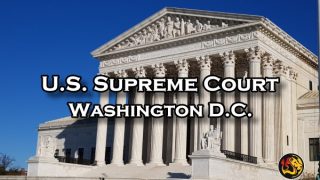
WASHINGTON D.C. (Worthy News) – President Donald Trump warned that Wednesday’s Supreme Court hearing on the legality of his sweeping tariff program is “life or death” for the United States, as justices wrestled over whether the president exceeded his authority under emergency powers law.
At stake is the core of Mr. Trump’s economic strategy: the use of tariffs as both a trade and national security tool. The court’s decision could determine whether the executive branch can continue imposing duties under the International Emergency Economic Powers Act (IEEPA) of 1977 — or whether such powers remain the sole domain of Congress.
“Tomorrow’s United States Supreme Court case is, literally, LIFE OR DEATH for our Country,” Mr. Trump wrote on social media Tuesday. “With a Victory, we have tremendous, but fair, Financial and National Security. Without it, we are virtually defenseless against other Countries who have, for years, taken advantage of us.”
Mr. Trump did not attend the hearing as initially planned. Treasury Secretary Scott Bessent, representing the administration, sat in the gallery. “I’m going to sit in the front row and have a ringside seat,” Bessent told Fox News Tuesday night.
The high court’s nine justices heard oral arguments from the Justice Department, defending the tariffs, and from attorneys representing small businesses who claim the duties are unconstitutional and have driven some to the brink of bankruptcy.
Chief Justice John Roberts pressed Solicitor General John Sauer on the text of the 1977 law, noting it “doesn’t use the word ‘tariffs.'” Roberts added that American companies — not foreign governments — bear the cost. Still, he acknowledged that tariffs have been “quite effective” in giving the president leverage abroad.
Justices Neil Gorsuch and Amy Coney Barrett, both Trump appointees, raised sharp concerns that the president’s interpretation of emergency powers could open the door to future abuse. “Under your theory,” Gorsuch said, “a president could use the same logic to declare an emergency over climate change — or even war — bypassing Congress entirely.”
Justice Barrett added, “None of the cases you cite confer tariff authority to the president.”
The court’s liberal wing echoed those warnings. Justice Elena Kagan called tariffs “quintessential Article I powers,” belonging to Congress. Justice Sonia Sotomayor compared Trump’s emergency justification to President Biden’s failed attempt to forgive student debt under COVID-19 powers.
Mr. Sauer defended the tariffs as a legitimate response to two crises: unfair trade imbalances and the fentanyl epidemic, which the administration argues constitutes a national emergency under the IEEPA. He said the law allows presidents to “regulate importation” in the national interest.
Mr. Trump’s tariffs — including global duties and targeted levies on China, Mexico, and Canada — have poured more than $118 billion in customs revenue into the Treasury this fiscal year. Supporters say the duties revived U.S. manufacturing and restored negotiating leverage. Critics argue they amount to unilateral taxation without congressional consent.
Attorney Neal Katyal, representing the challengers, warned that a ruling in Trump’s favor would hand presidents “unchecked authority to impose taxes by declaring emergencies at will.”
Both sides have asked for an expedited decision, but the Court typically takes weeks or months to issue rulings in complex constitutional cases.
The twin cases, Learning Resources v. Trump and Trump v. V.O.S. Selections, could shape the limits of presidential power for decades — and determine whether Mr. Trump’s tariff framework, a cornerstone of his economic platform, survives judicial scrutiny.

Worthy News reports from a biblical worldview with a commitment to accuracy, transparency, and editorial independence. Learn more about About Worthy News, our Editorial Standards, AI Use Policy, Ownership of Worthy News, News Tips and Corrections, and Worthy News Staff.
💡 Did you know? One of the best ways you can support Worthy News is by simply leaving a comment and sharing this article.
📢 Social media algorithms push content further when there’s more engagement — so every 👍 like, 💬 comment, and 🔄 share helps more people discover the truth. 🙌
Latest Worthy News
If you are interested in articles produced by Worthy News, please check out our FREE sydication service available to churches or online Christian ministries. To find out more, visit Worthy Plugins.