Supreme Court Protects Religious Liberty in Landmark Vaccine Case, Orders New York Mandate Reconsidered
by Emmitt Barry, Worthy News Washington D.C. Bureau Chief (Worthy News) –
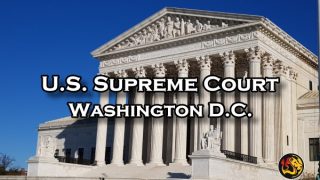
WASHINGTON D.C. (Worthy News) – In a major victory for religious liberty and parental rights, the U.S. Supreme Court on Monday reversed a lower court ruling that had upheld New York State’s strict vaccine mandates for schoolchildren, directing the appeals court to reconsider the case under newly strengthened constitutional protections.
The case, Miller v. McDonald, was brought by a group of Amish parents and school leaders who argued that New York’s elimination of religious exemptions in 2019 violated their First Amendment rights. The plaintiffs said the mandate forced them to choose between violating their religious convictions and closing the small one-room schools that have served their community for generations.
In a rare procedural move, the Supreme Court not only agreed to hear the appeal but issued an immediate summary disposition, vacating the Second Circuit’s decision and instructing it to reconsider the case in light of Mahmoud v. Taylor–a landmark ruling issued this past June that broadly expanded constitutional protections for parents whose religious beliefs conflict with public-school policies.
“Checkmate,” attorney says: Decision reshapes national religious exemption landscape
Attorney Sujata Gibson, who represents the Amish families, called the Supreme Court’s action “checkmate” for states that have eliminated religious exemptions.
“It means we’re almost certainly getting the religious exemption back, not only in New York, but across the country,” Gibson told The Defender. “By vacating the dismissal, the Supreme Court signaled that Mahmoud applies to vaccine cases. Mahmoud provides incredibly broad protection to parental religious rights infringed by school policies.”
Children’s Health Defense General Counsel Kim Mack Rosenberg said the implications stretch far beyond one state.
“Mahmoud v. Taylor is now binding precedent nationwide. Any state that has stripped religious exemptions must reconsider whether its policies violate parents’ constitutional rights,” she said.
How the Supreme Court changed the legal landscape
For decades, challenges to vaccine mandates have faltered under the 1990 Employment Division v. Smith decision, which held that neutral, generally applicable laws do not need to accommodate religious beliefs.
Vaccine mandates, applying across the population, were typically upheld.
But Mahmoud v. Taylor revived and broadened the Yoder exception, first recognized in Wisconsin v. Yoder (1972), where Amish parents were exempted from the state’s compulsory high-school attendance law because it burdened their religious exercise.
In Mahmoud, the Court ruled that public schools must allow opt-outs for parents who object to certain curriculum materials–such as LGBTQ-themed books–on religious grounds.
Legal scholars now say the Court has effectively created a new standard: If a public-school policy substantially burdens sincere religious practice–even if the policy is neutral–courts must apply strict scrutiny.
That standard is extremely difficult for states to satisfy.
New York’s aggressive enforcement triggered national scrutiny
The Amish schools at the center of the case–Dygert Road School, Twin Mountains School, and Shady Lane School–received massive fines for a single day of alleged noncompliance after refusing to vaccinate their students:
• Dygert Road School — $52,000
• Twin Mountains School — $46,000
• Shady Lane School — $20,000
State officials also warned that fines could escalate to $2,000 per unvaccinated child per day, a threat the families said was designed to bankrupt their religious schools and force closure.
While some public schools in New York reportedly issued medical exemptions to 30-50 percent of students, Amish schools were granted no exemptions whatsoever.
The Amish community’s plea was simple: “We only ask to be left alone to live out our faith,” First Liberty Institute President Kelly Shackelford said.
Supreme Court sends strong message on parental rights
By instructing the Second Circuit to reconsider the case under Mahmoud, the Supreme Court effectively declared that parental religious rights cannot be brushed aside in the name of administratively convenient public-health policy.
The ruling also comes as the U.S. Department of Health and Human Services investigates a Midwestern school accused of vaccinating a student without parental consent.
“HHS is putting pediatric care providers on notice,” Secretary Robert F. Kennedy Jr. said last week. “You cannot sideline parents.”
A new chapter for religious liberty in America
This decision may mark the most significant shift in religious-exemption jurisprudence in decades, placing the First Amendment back at the center of vaccine and education policy.
As more religious liberty and medical freedom cases work through the courts, attorneys expect that states that eliminated religious exemptions will now face legal pressure to restore them.
“This is huge,” Gibson said. “The Supreme Court has now made plain that parents do not surrender their religious rights at the schoolhouse door.”

Worthy News reports from a biblical worldview with a commitment to accuracy, transparency, and editorial independence. Learn more about About Worthy News, our Editorial Standards, AI Use Policy, Ownership of Worthy News, News Tips and Corrections, and Worthy News Staff.
💡 Did you know? One of the best ways you can support Worthy News is by simply leaving a comment and sharing this article.
📢 Social media algorithms push content further when there’s more engagement — so every 👍 like, 💬 comment, and 🔄 share helps more people discover the truth. 🙌
Latest Worthy News
If you are interested in articles produced by Worthy News, please check out our FREE sydication service available to churches or online Christian ministries. To find out more, visit Worthy Plugins.