
Hungary at Crossroads as Elections Loom and Budapest Mayor Wins Human Rights Award (Worthy News Focus)
 by Stefan J. Bos, Worthy News Europe Bureau Chief
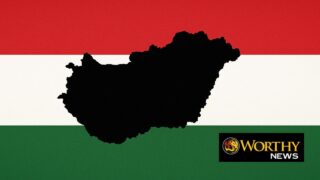
AMSTERDAM/BUDAPEST (Worthy News) – Hungary is entering a decisive political season as parliamentary elections are set for April 12, 2026, and the progressive mayor of Budapest receives a prestigious Dutch human rights award for defying Prime Minister Viktor Orbán and defending democratic freedoms.
President Tamás Sulyok announced the election date Tuesday, urging citizens to vote. “One of the cornerstones of democracy is the right to vote freely,” he said in a social media post.
The vote is widely seen as the most serious challenge in years to Orbán, 62, who has governed Hungary continuously since 2010, after previously serving as prime minister from 1998 to 2002. He describes his political system as an “illiberal democracy.” His nationalist-populist Fidesz party is trailing in several opinion polls.
According to news outlet POLITICO’s Poll of Polls, the opposition Tisza Party, led by former Fidesz insider Péter Magyar, 45, holds a 49 percent lead, compared with 37 percent for Fidesz — Orbán’s largest polling deficit since returning to power.
Other opinion polls show Magyar ahead by roughly seven percentage points.
ORBÁN FRAMES ELECTION AS “WAR OR PEACE”
Orbán has dismissed the opposition and framed the election as a civilizational choice. “This election is about war or peace,” he has said, accusing critics and Brussels of trying to drag Hungary into the war in Ukraine.
“Hungary will not allow others to decide who we live with, how we raise our children, or whether we go to war,” Orbán said at a recent international forum.
As the campaign intensifies, Gergely Karácsony, the liberal mayor of Hungary’s capital Budapest and one of Orbán’s most visible domestic critics, has received the Geuzenpenning, a Dutch human rights award honoring resistance against oppression and dictatorship.
The Dutch foundation behind the award praised Karácsony for his “courageous commitment to democratic values, freedom of expression and equal rights in an increasingly authoritarian political climate.”
Karácsony said the award belongs not just to him, but to the people of Budapest. “It is an honor to stand in a line that includes Václav Havel, Richard Gere and László Tőkés,” he said. “But this year’s prize inevitably brings back memories of the Pride march in Budapest. That alone would justify dividing the award into hundreds of thousands of pieces.”
PRIDE MARCH BECAME ‘SYMBOL OF RESISTANCE’
He added: “Everyone who stood up for freedom on that unforgettable day in June deserves it. Standing next to freedom is not heroism. It is a shared responsibility.”
Last summer, Karácsony allowed Budapest’s Pride march to proceed despite a government and police ban, drawing hundreds of thousands of participants, including foreign dignitaries such as Amsterdam Mayor Femke Halsema from the Netherlands.
The move made him a national and international symbol of resistance to Orbán’s restrictions on LGBTQ+ expression and civil liberties.
Orbán has sharply criticized what he calls “liberal activism,” saying Hungary is under attack for defending national sovereignty and traditional Christian values. “They want to force a model on us that we reject,” he said. “Hungary belongs in the European Union and NATO, but only as a sovereign nation, not as a province of Brussels.”
Critics accuse Orbán of centralizing power, weakening independent institutions and bringing large parts of the media under political control. The European Union has frozen billions of euros in funding over concerns about corruption and judicial independence.
DEFINING MOMENT AHEAD OF APRIL VOTE
Karácsony, by contrast, says Hungary’s strength lies in openness. “Budapest was always strongest when it insisted on freedom without fear,” he said.
“Those who want to live, love and prosper are not betraying this country — they are its future,” the mayor added.
Orbán has so far refused to debate opposition leader Magyar, saying he will only debate what he calls “sovereign people.” His last televised debate with an opponent was in 2006.
With the official campaign period beginning February 21, Hungary now faces a defining moment: whether Orbán’s vision of an illiberal state will endure, or whether an opposition — buoyed by urban resistance, economic discontent and international pressure — can force political change.
As Karácsony prepares to receive the Geuzenpenning on March 13 in the Netherlands, marking the legacy of resistance against tyranny, Hungary’s voters will soon decide whether that spirit of defiance remains symbolic — or becomes political reality.

Worthy News reports from a biblical worldview with a commitment to accuracy, transparency, and editorial independence. Learn more about About Worthy News, our Editorial Standards, AI Use Policy, Ownership of Worthy News, News Tips and Corrections, and Worthy News Staff.
💡 Did you know? One of the best ways you can support Worthy News is by simply leaving a comment and sharing this article.
📢 Social media algorithms push content further when there’s more engagement — so every 👍 like, 💬 comment, and 🔄 share helps more people discover the truth. 🙌
Latest Worthy News
If you are interested in articles produced by Worthy News, please check out our FREE sydication service available to churches or online Christian ministries. To find out more, visit Worthy Plugins.