
EU Struggles To Stay United Over Iran War As Energy Shock Rattles Central And Eastern Europe (Worthy News Analysis)
 by Stefan J. Bos, Worthy News Europe Bureau Chief
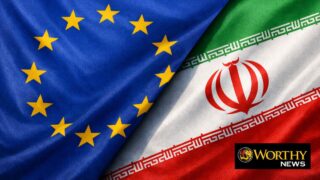
BRUSSELS/BUDAPEST (Worthy News) – The European Union struggled to remain united Tuesday as leaders of the 27-nation bloc debated how to respond to ongoing U.S.-Israeli strikes against Iran.
Spain accused Washington and Israel of violating international law. “We want military actions always under the United Nations Charter and under collective effort,” Spanish Foreign Minister José Manuel Albares said, urging European partners to speak out.
Germany struck a different tone. Chancellor Friedrich Merz backed the strikes, saying Europe should not “lecture” its allies, while NATO Secretary-General Mark Rutte spoke of “widespread support” within the alliance.
The disagreement exposes broader divisions — especially between Western Europe and Central and Eastern Europe.
For Central and Eastern European governments, the debate is not only legal but economic, centered on energy vulnerability.
CENTRAL EUROPE ENERGY RISK
Hungary, still dependent on imported Russian oil and natural gas, warned that Middle East instability could deepen market strains already caused by Russia’s war in Ukraine.
Tensions persist between Budapest, Bratislava, and Kyiv over the Soviet-era Druzhba oil pipeline, which supplies Russian crude to Hungary and Slovakia. Both governments accuse Kyiv of halting flows to pressure them politically, including to secure backing for Ukraine’s EU accession — which they oppose. Ukraine says Russian strikes on pumping installations in western Ukraine caused the disruption.
Hungary’s energy firm MOL said it imported about 35,000 tons of Ukrainian crude via Druzhba at Kyiv’s request. However, broader shipments to Hungary and Slovakia — the only EU states still importing Russian oil through that route — have been suspended since January 27 following what Ukraine described as a Russian attack on pipeline infrastructure.
The dispute highlights how exposed Central and Eastern Europe remains to supply shocks.
Hungarian Prime Minister Viktor Orbán’s government has argued that energy security must outweigh geopolitical positioning, resisting policies that could threaten supply stability ahead of parliamentary elections on April 12.
OIL PRICES CLIMB
Oil rose for a second straight day while natural gas surged amid uncertainty over exports from Qatar, home to the world’s largest liquefied natural gas facility.
Energy-importing nations remain vulnerable, especially as domestic production declines elsewhere in Europe.
In the Netherlands, prices face renewed pressure after the closure of the Groningen natural gas field, once Europe’s largest. The government cited earthquake risks and climate goals in shifting toward green energy.
Prime Minister Rob Jetten, formerly climate minister, has said the Netherlands’ total impact on reducing global warming would amount to about 0.000036 degrees Celsius (roughly 0.000065 degrees Fahrenheit) if all multibillion-euro climate plans are implemented. Critics cite that figure when questioning the economic trade-offs of ending domestic gas production.
For Central and Eastern Europe, upheaval in the Middle East, pipeline tensions, and reduced European output expose structural supply weaknesses.
MARKETS UNDER PRESSURE
The tensions came while European stocks fell and bond markets weakened Tuesday as investors assessed the risk of a prolonged conflict.
Analysts warned that sustained high energy prices could strain public finances, forcing governments to shield households and businesses.
A surprise rise in eurozone inflation fueled speculation about possible European Central Bank action later this year.
The International Energy Agency said it stands ready to stabilize markets, noting member states hold more than one billion barrels in emergency reserves.
The EU imports roughly 55–60 percent of its total energy needs, leaving many member states highly exposed during geopolitical crises.
STRATEGIC STRAINS IN FOCUS
Attention has also turned to the Strait of Hormuz, a key oil transit route, amid fears of disruption.
The crisis unfolds as the EU navigates sensitive trade discussions with Washington, where tariff policy remains uncertain.
Hungary has urged caution against steps that could deepen economic fragmentation, warning Europe must avoid compounding crises.
China has called for safeguarding maritime routes while Gulf producers assess output adjustments.
As debates over legality, strategy, and economic fallout intensify, the widening conflict has exposed divisions within the bloc.
For Central and Eastern Europe — where dependence on external oil and gas remains acute — the Iran war underscores how quickly external shocks can reverberate through domestic economies.
With markets unsettled and unity strained, Europe now faces the challenge of preserving cohesion while protecting economic stability in an increasingly volatile world.

Worthy News reports from a biblical worldview with a commitment to accuracy, transparency, and editorial independence. Learn more about About Worthy News, our Editorial Standards, AI Use Policy, Ownership of Worthy News, News Tips and Corrections, and Worthy News Staff.
💡 Did you know? One of the best ways you can support Worthy News is by simply leaving a comment and sharing this article.
📢 Social media algorithms push content further when there’s more engagement — so every 👍 like, 💬 comment, and 🔄 share helps more people discover the truth. 🙌
Latest Worthy News
If you are interested in articles produced by Worthy News, please check out our FREE sydication service available to churches or online Christian ministries. To find out more, visit Worthy Plugins.