
U.S. States Push Back as Employee Microchip Implants Raise Privacy and Security Concerns
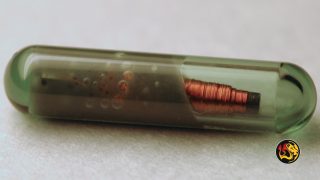 by Emmitt Barry, Worthy News Washington D.C. Bureau Chief
(Worthy News) – A growing number of U.S. states are moving to restrict or outright ban the use of microchip implants in the workplace, as advances in biohacking technology raise serious questions about privacy, personal freedom, and the future of human identity.
In March, Washington Governor Bob Ferguson signed legislation prohibiting employers from requiring, coercing, or even requesting employees to receive microchip implants. Lawmakers behind the bill warned that while the technology may appear innovative, it opens the door to unprecedented levels of surveillance and control.
State Rep. Brianna Thomas, who sponsored the measure, cautioned that microchips could allow employers to track individuals not only during work hours but potentially beyond, creating what she described as a deeply concerning intrusion into personal liberty.
Washington joins at least 13 other states that have enacted similar restrictions, while Nevada has gone further—banning microchip programs altogether, even on a voluntary basis.
The concern is not merely theoretical. Early adoption efforts, such as those by Wisconsin-based Three Square Market in 2017, demonstrated how implanted chips could be used to unlock doors, access computers, and make purchases with a simple wave of the hand. Dozens of employees embraced the convenience, but the program also triggered widespread backlash over privacy and religious implications.
Today, the technology continues to advance. Companies like Dangerous Things offer consumer-grade implants that can interface with smartphones, door locks, and digital systems. Meanwhile, breakthroughs in medical technology—including developments by Neuralink and Paradromics—are pushing the boundaries even further, enabling direct brain-computer interaction and offering hope for patients with paralysis or speech impairment.
Yet alongside innovation comes risk. Experts warn that implanted devices could be vulnerable to hacking, potentially exposing sensitive personal, financial, and medical data. Some studies have also raised concerns about physical risks, including tissue damage and tumor formation observed in laboratory settings.
Critics argue that even voluntary adoption could evolve into subtle coercion—where convenience gradually becomes expectation, and expectation becomes requirement.
Despite reassurances from companies that current implants do not track location and are designed with privacy in mind, skepticism remains strong. Lawmakers and privacy advocates warn that the infrastructure being built today could be repurposed tomorrow in ways that threaten fundamental freedoms.
A Prophetic Perspective
For many believers, these developments echo a sobering warning found in Scripture. The Bible speaks of a future system in which economic participation becomes conditional upon receiving a mark:
“And that no man might buy or sell, save he that had the mark…” — Revelation 13:17
While current microchip technology is not itself the fulfillment of this prophecy, it represents a significant step toward a world where commerce, identity, and access are increasingly tied to embedded or digital systems. What was once unimaginable is now technologically feasible.
The concern is not merely about a device—but about a global framework that could one day centralize control over buying, selling, and personal identity.
At the same time, Scripture reminds believers that God remains sovereign over history. Even as technology advances rapidly, the unfolding of prophetic events ultimately points toward the return of Jesus Christ and the establishment of His Kingdom.
In a world racing toward deeper integration between man and machine, the call for discernment has never been more urgent.

Worthy News reports from a biblical worldview with a commitment to accuracy, transparency, and editorial independence. Learn more about About Worthy News, our Editorial Standards, AI Use Policy, Ownership of Worthy News, News Tips and Corrections, and Worthy News Staff.
💡 Did you know? One of the best ways you can support Worthy News is by simply leaving a comment and sharing this article.
📢 Social media algorithms push content further when there’s more engagement — so every 👍 like, 💬 comment, and 🔄 share helps more people discover the truth. 🙌
Latest Worthy News
If you are interested in articles produced by Worthy News, please check out our FREE sydication service available to churches or online Christian ministries. To find out more, visit Worthy Plugins.